What Makes a Dress Structured? Seams, Fabric and Fit Explained
A structured dress has a deliberately defined shape, but there is no single checklist of features every structured dress must have. Darts, seams, a shaped waistband, fabric body, lining and reinforcement can each contribute. The useful shopping question is how the particular dress creates its outline and whether that outline fits you comfortably.
Start with the pattern and seams
Darts take up fabric to shape the bust, waist or back. Seams can join shaped panels and control fullness. Look at where they sit on the actual garment, then check that those points align with your body. More seams do not automatically mean better construction; a simple pattern can be well fitted and carefully finished.
A belt can define the waist visually without changing the underlying pattern. Smocking or elastic adds another kind of shaping. Neither method is inherently inferior: judge how the bodice, waist and skirt fit together in motion.
| Feature | What it can do | What it does not establish |
|---|---|---|
| Darts or shaped seams | Create room or definition at specific areas. | Correct fit for every body or superior quality. |
| Fabric body | Help a skirt or bodice keep a particular outline. | Longer life, wrinkle resistance or all-day comfort. |
| Lining | Add coverage and affect how a garment moves over underlayers. | Guaranteed durability or a particular amount of support. |
| Interfacing or reinforcement | Stabilize selected areas such as collars or openings. | A feature you can assume is present from the exterior photo. |
| Stretch | Allow movement depending on the fabric and construction. | The amount of ease in the finished garment. |
Read fabric and lining as separate layers
The shell creates much of the visible surface, while the lining can change opacity, movement and fit. A stretch shell paired with a less flexible lining may feel different from the shell alone. Ask about the lining if it is not specified, especially in a fitted or light-colored dress.
Woven fabrics and knits can both produce defined shapes. Ponte can have enough body for a shaped sheath; a lightweight woven fabric can remain fluid. The name “tweed,” “wool” or “crepe” does not tell you the exact weight, weave, finish or performance of a particular garment.
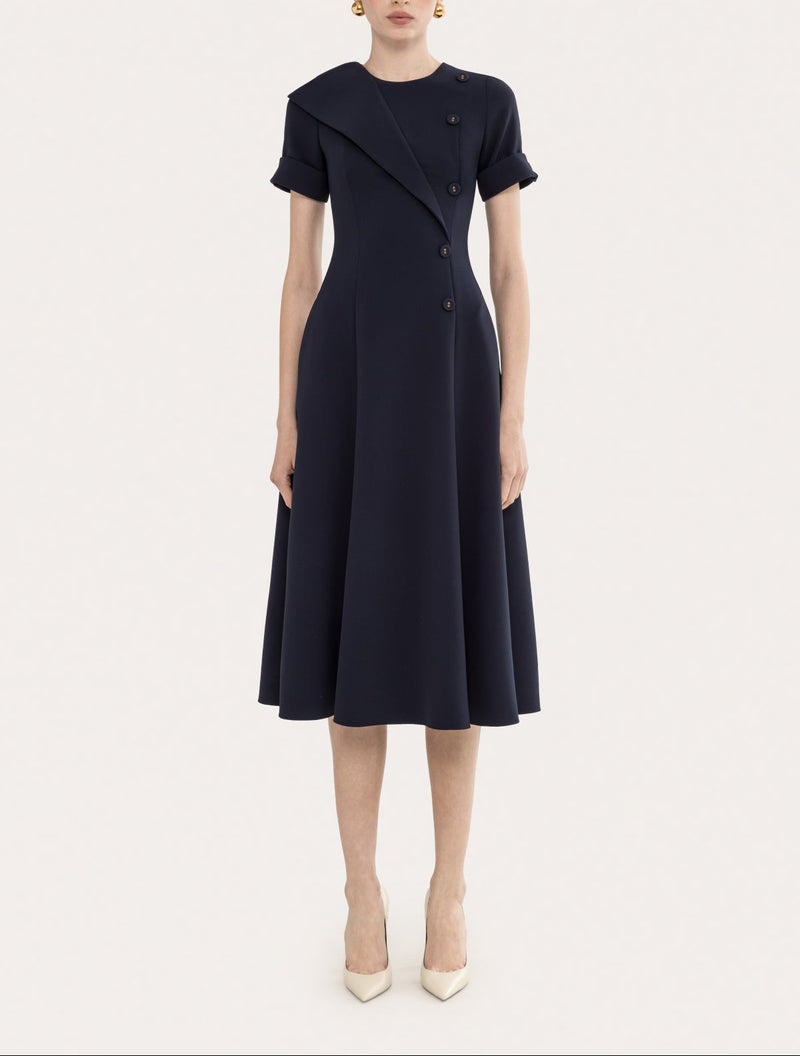
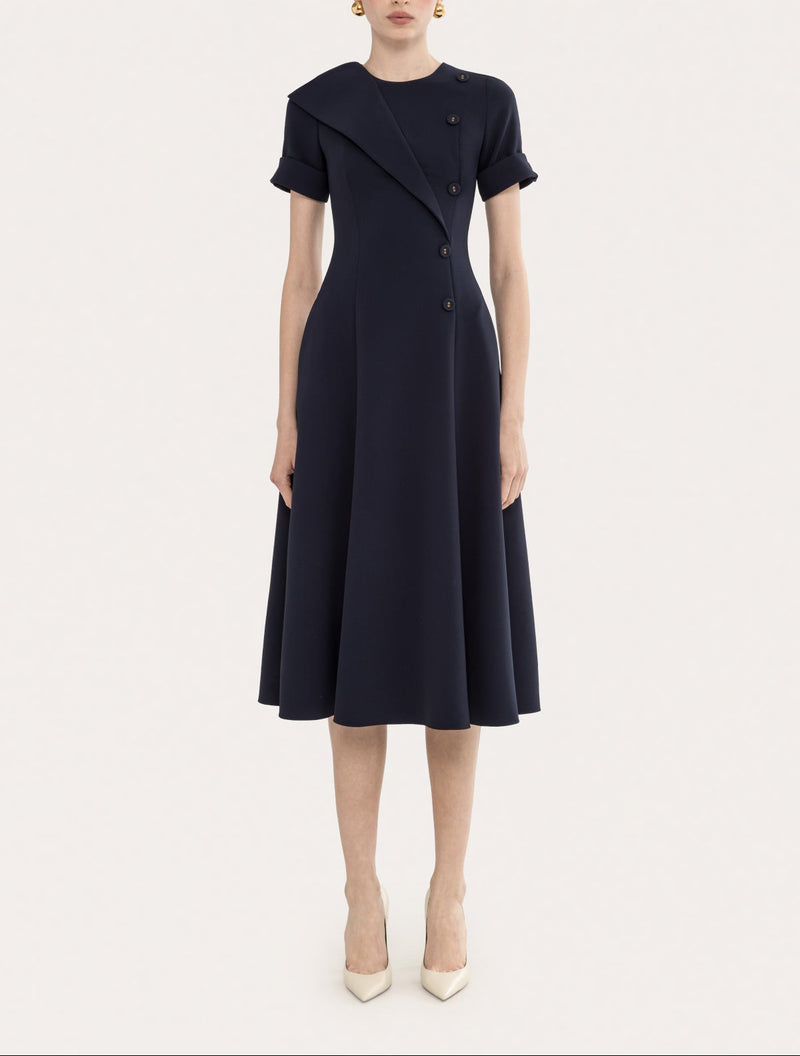
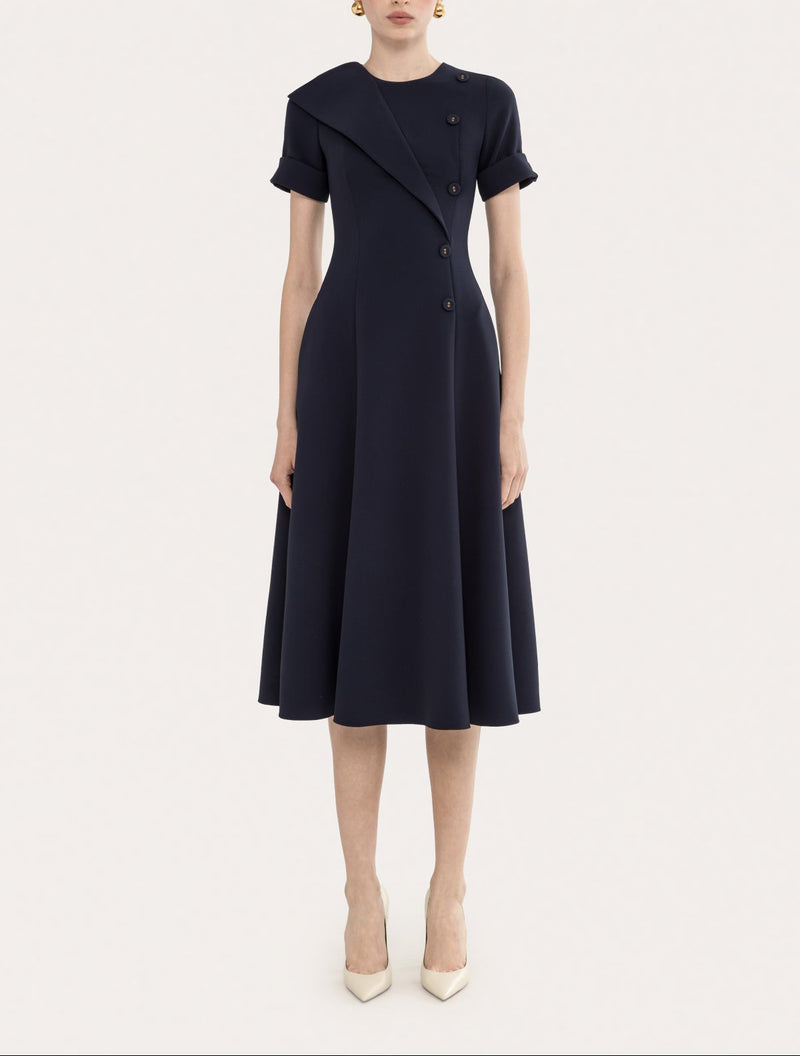
NISSA navy A-line midi

The NISSA navy midi offers visible waist shaping and an A-line skirt, plus separately stated shell and lining compositions. Those details provide more useful information than calling it “engineered” without explaining the garment. Check the placement of the waist and the ease through the bust.
Materials: 92% polyester, 8% spandex; 97% viscose, 3% spandex lining.
Before choosing: Use the NISSA Romanian size chart; confirm bust and waist ease. The label calls for delicate dry cleaning.
WEILL black wool-crêpe shift

The WEILL shift uses a straight body with chest darts and sheer voile sleeves. Its wool body and lining are specified, but the silhouette is not a tightly shaped sheath. This example shows why structure should be described through the actual cut rather than a blanket fabric label.
Materials: 100% wool body, polyester voile sleeves; acetate/viscose lining.
Before choosing: Sheer sleeves and the shorter hem need a workplace coverage check. Professional cleaning is specified; do not machine wash.
Inspect the garment when it arrives
Check seam stitching, closures, loose threads, lining attachment and whether the hem hangs evenly on you. A seam pulling sideways may reflect a fit mismatch rather than a defect; compare the measurements before deciding. Try the dress with the undergarments and shoes you intend to wear.
Sit, walk and reach. You should be able to move without the waist digging in, the neckline shifting excessively or the lining restricting your stride. Ordinary fashion dresses should not be described as posture-correcting garments.
Use construction details to make a practical choice
Choose a dress whose shape suits the occasion and whose care requirements fit your routine. Longevity depends on the specific textile, finishing, use and care; it cannot be established by fabric thickness or lining alone. If a feature matters to you and the listing is silent, ask before ordering.
Before you order
Browse structured dresses, select your size or color, and check the live product price and availability. Compare the brand’s size chart with your measurements and review the item’s final-sale label and current return policy.
Continue your guide
Structured vs Soft Silhouettes: Shape, Fit and Everyday Use, Fabric for Professional Dresses: Compare Fiber, Lining and Care, Structured Work Dresses: A Practical Guide to Fit and Coverage.