Fabric for Professional Dresses: Compare Fiber, Lining and Care
Choosing fabric for a work dress involves more than choosing a fiber name. The weave or knit, weight, finish, lining and cut all affect how the garment behaves. A photograph and a composition label can help you shortlist a dress, but they cannot establish wrinkle resistance, breathability, recovery or lifespan on their own.
| Term | What it describes | What still needs checking |
|---|---|---|
| Wool, cotton, silk, polyester or rayon | The fiber or blend used in the fabric. | Weight, construction, finish, lining and care. |
| Crepe | A textured fabric surface or construction; fibers vary. | Actual composition and whether the garment is fluid or firm. |
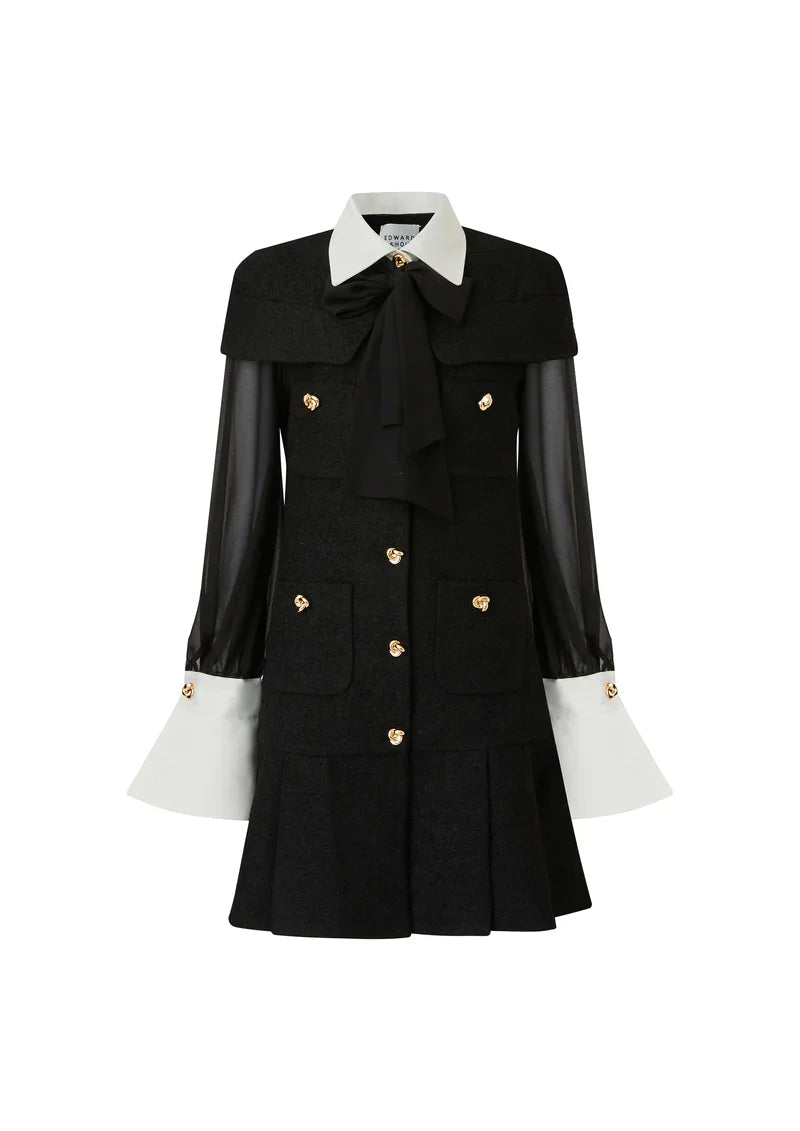
| Tweed | A textured woven fabric category; blends vary. | Fiber content, weave openness, lining and care. |
| Ponte | A double-knit fabric that can have a relatively substantial body. | Composition, stretch, recovery and fit in that specific garment. |
| Lining | An additional inner layer. | Its composition, coverage and effect on movement. |
Compare actual garments, not fabric rankings
A heavier fabric can support a particular outline, but it can also feel too warm or bulky for your routine. A lighter fabric can be well made and suitable for work when coverage and construction are appropriate. Softness is not a defect, and stiffness is not proof of quality.
A small elastane percentage does not translate into a fixed amount of stretch in the finished dress. The knit or weave, seams and lining can limit movement. If the listing describes minimal give or no stretch, use that information when choosing your size.
| BTK selection | Material and construction | Fit or shopping check |
|---|---|---|
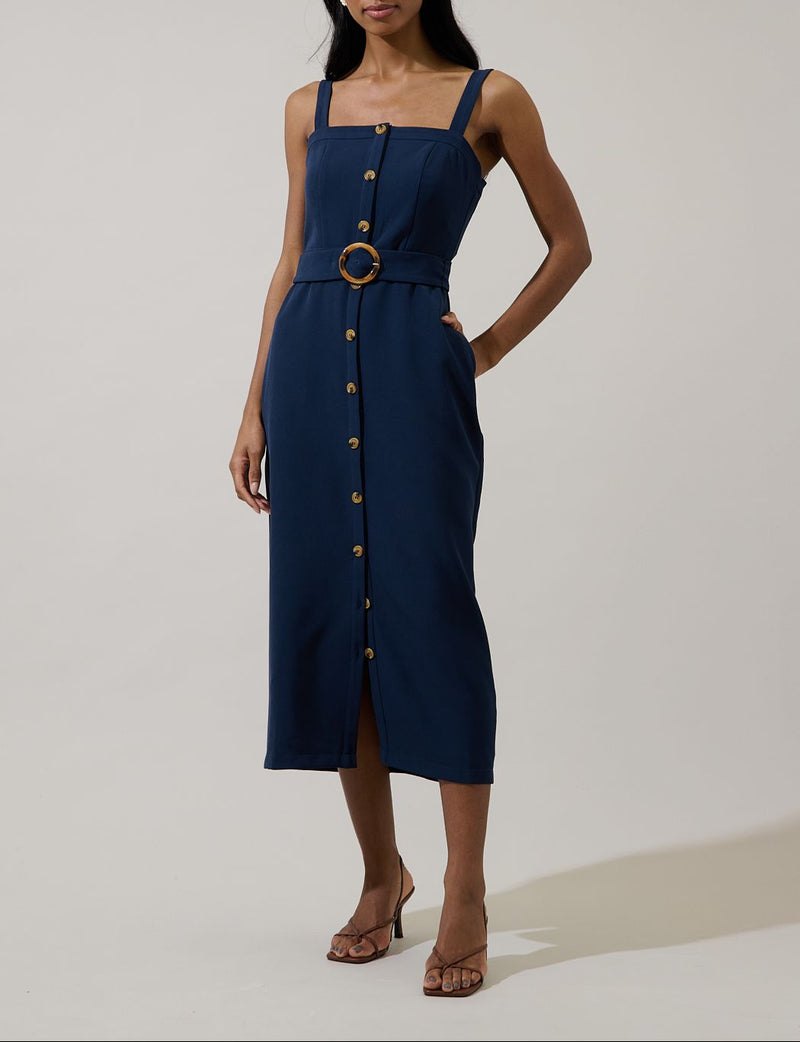
| NISSA navy A-line midi | 92% polyester, 8% spandex; 97% viscose, 3% spandex lining. | Use the NISSA Romanian size chart; confirm bust and waist ease. The label calls for delicate dry cleaning. |
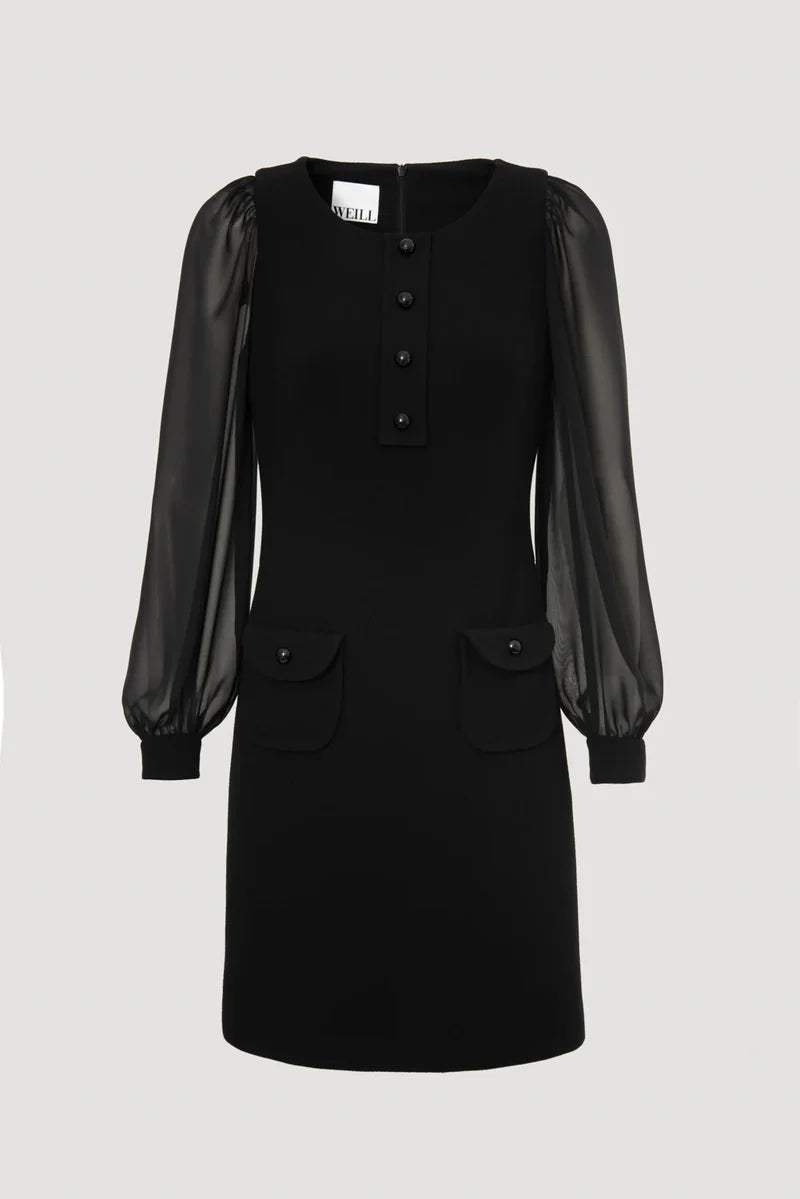
| WEILL black wool-crêpe shift | 100% wool body, polyester voile sleeves; acetate/viscose lining. | Sheer sleeves and the shorter hem need a workplace coverage check. Professional cleaning is specified; do not machine wash. |
| SUGARLIPS Camady navy midi | 96% polyester, 4% spandex; polyester/spandex lining. | The size-S reference length is 41.75 inches. Check your own hem position and front opening; hand washing is specified. |
| GRADE & GATHER cacao jacquard midi | 70% polyester, 30% rayon. | Ideal for a business-casual dress code that allows relaxed silhouettes. Lining is not specified; follow the actual care label. |
WEILL black wool-crêpe shift

The WEILL shift shows why separate layer descriptions matter: a wool-crêpe body, polyester voile sleeves and acetate/viscose lining serve different parts of the garment. The sleeves remain sheer despite the lined body. Its professional-cleaning requirement may affect how often you want to rotate it into your wardrobe.
Materials: 100% wool body, polyester voile sleeves; acetate/viscose lining.
Before choosing: Sheer sleeves and the shorter hem need a workplace coverage check. Professional cleaning is specified; do not machine wash.
GRADE & GATHER cacao jacquard midi

The cacao jacquard midi combines a polyester/rayon blend with a smocked waist and tiered skirt. The softer outline is a design choice. Because lining is not specified, ask if opacity or the feeling against your skin is central to your decision.
Materials: 70% polyester, 30% rayon.
Before choosing: Ideal for a business-casual dress code that allows relaxed silhouettes. Lining is not specified; follow the actual care label.
Inspect fit and movement when you try it on
Sit for a few minutes, walk and reach forward. Look at the waist, hips, seams and lining afterward. Notice whether the fabric pulls, the lining restricts your stride or the neckline shifts. This practical check is more useful than assuming that every crepe resists creases or every natural fiber feels comfortable all day.
Check opacity in bright light and try the intended undergarments. If layering, assess the dress and jacket together so sleeve volume and fabric friction do not create discomfort.
Choose care that suits your routine
Read the actual care instructions before washing, steaming or ironing. Blends, trims and linings can change the care required even when two dresses share a main fiber. Follow the specified drying method and avoid assuming all tweed, silk or polyester garments need the same treatment.
Assess value through the purchase price, likely use, alterations and cleaning costs. No fabric category guarantees years of wear or a lower environmental impact. Clear material information helps you decide without making those promises.
Before you order
Browse work dresses, select your size or color, and check the live product price and availability. Compare the brand’s size chart with your measurements and review the item’s final-sale label and current return policy.
Continue your guide
What Makes a Dress Structured? Seams, Fabric and Fit Explained, Structured vs Soft Silhouettes: Shape, Fit and Everyday Use, Professional Dresses for Women: Compare 7 BTK Brands.