Why Choose Structured Work Dresses? Practical Styling Benefits
Defined silhouettes are a useful option in a professional wardrobe because they can provide a clear starting point for an outfit. A shaped waist, collar or A-line skirt may work well with pieces you already own. That usefulness depends on your preferences and workplace; softer dresses can also be polished and practical.
A defined shape can simplify the styling decision
If a dress already has a collar, belt or visible seams, try it first with simple shoes and one accessory. You may find that the dress supplies enough detail. This is an outfit-planning approach, not a claim that a particular silhouette makes you more competent or confident.
A consistent set of combinations can be useful on busy mornings. Keep photographs of outfits you have worn comfortably and repeat them when the occasion fits. You do not need every dress in the wardrobe to have the same outline.
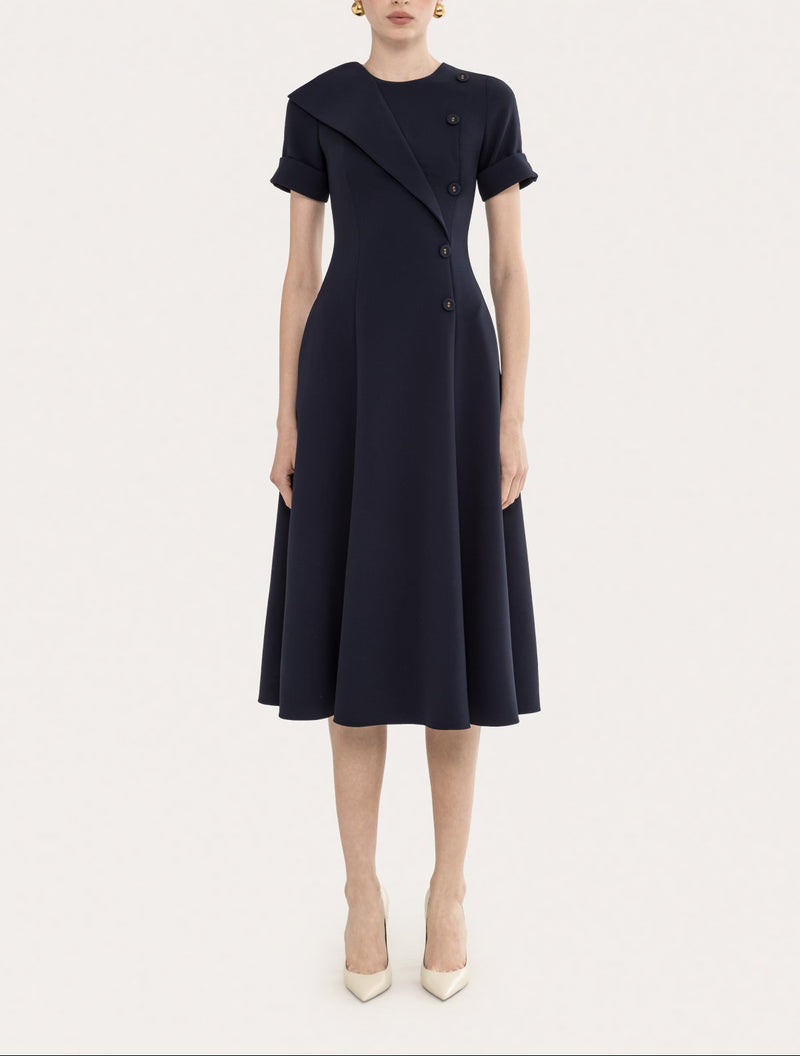
NISSA navy A-line midi

NISSA’s navy midi combines a defined waist with an A-line skirt. It is ideal to compare when you prefer visible shaping and a high neckline. Check the actual fit through the bust and waist rather than assuming the seams provide physical support.
Materials: 92% polyester, 8% spandex; 97% viscose, 3% spandex lining.
Before choosing: Use the NISSA Romanian size chart; confirm bust and waist ease. The label calls for delicate dry cleaning.
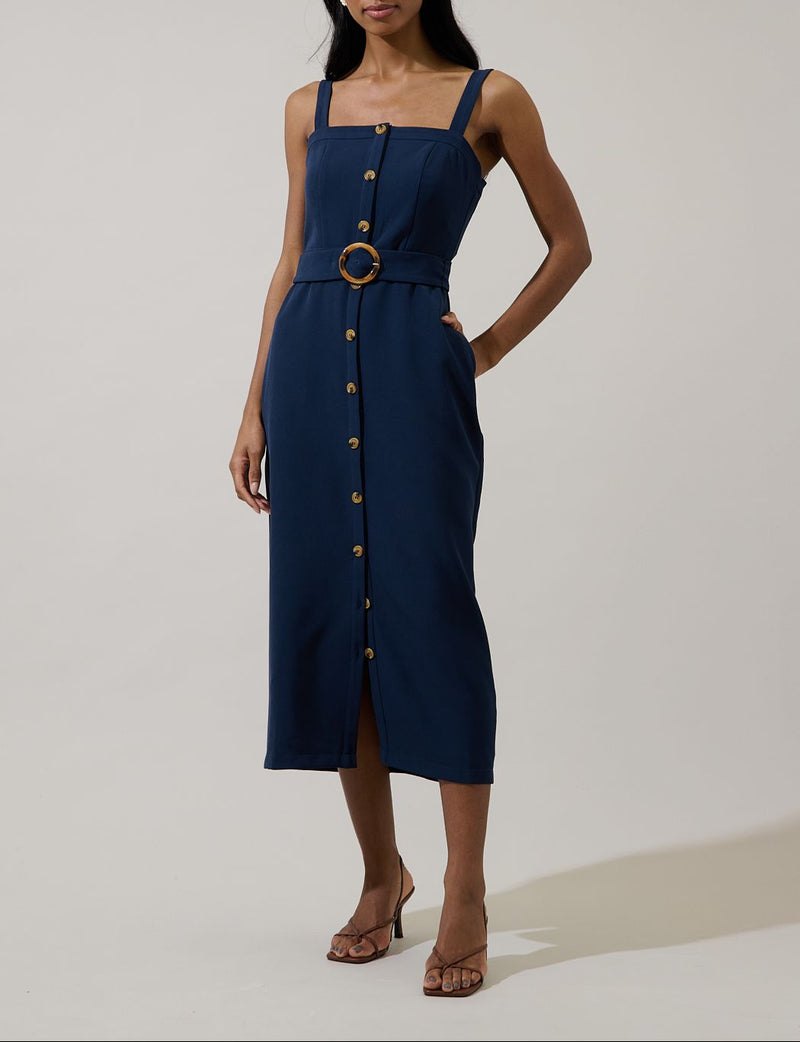
SUGARLIPS Camady navy midi

Camady offers a different defined shape through a square neckline, belt and straighter skirt. It is sleeveless, so shoulder coverage depends on the workplace and any layer you choose. Try it with the jacket or cardigan you intend to wear before considering the outfit complete.
Materials: 96% polyester, 4% spandex; polyester/spandex lining.
Before choosing: The size-S reference length is 41.75 inches. Check your own hem position and front opening; hand washing is specified.
Compare structure with a softer option
A relaxed dress can be a useful part of the same work wardrobe. The cacao jacquard midi has a smocked waist and tiered skirt, giving it more fullness than the two examples above. Choose between them by dress code, comfort and the outline you prefer, not by an assumption that one construction is more professional.
Use the structured-versus-soft comparison to separate silhouette from quality. Both types can be lined and carefully made.
Check what matters during a full workday
Try sitting, walking, reaching and wearing your usual outer layer. Look for a neckline that stays comfortable, enough room at the waist and a skirt that allows your stride. A dress with shaped shoulders should accommodate your posture; it should not be claimed to improve it.
Review the lining, closures and care instructions. Stretch, wrinkle resistance and long-term wear cannot be inferred from a fabric name or photograph alone. Ask about missing details when they affect your decision.
Buy for a specific wardrobe gap
Identify the occasions a new dress will serve and the shoes, bag and layer already available to wear with it. If it duplicates several dresses you rarely use, reconsider the gap. Repeat use can make a purchase more useful to you, but it does not prove a lower environmental impact or guaranteed longevity.
Before you order
Browse structured dresses, select your size or color, and check the live product price and availability. Compare the brand’s size chart with your measurements and review the item’s final-sale label and current return policy.
Continue your guide
Structured Work Dresses: A Practical Guide to Fit and Coverage, Build a Work Dress Capsule: Fit, Outfit Roles and Repeat Wear, 7 Work Outfits for Women: BTK Dresses for Different Workdays.